
Legacy Software Modernization TX: Future-Proofing Enterprise Systems
When operational workflows slow down, growing businesses in Texas face an immediate tech bottleneck. Outdated software dependencies stall growth, open severe security backdoors, and drain resources through continuous maintenance. To remain competitive in a digital-first economy, shifting away from obsolete technical frameworks is no longer an optional project; it is a critical growth strategy.
Executing a successful roadmap for legacy software modernization tx ensures that foundational architectures scale seamlessly alongside modern business demands.
The Operational Risk of Outdated Systems
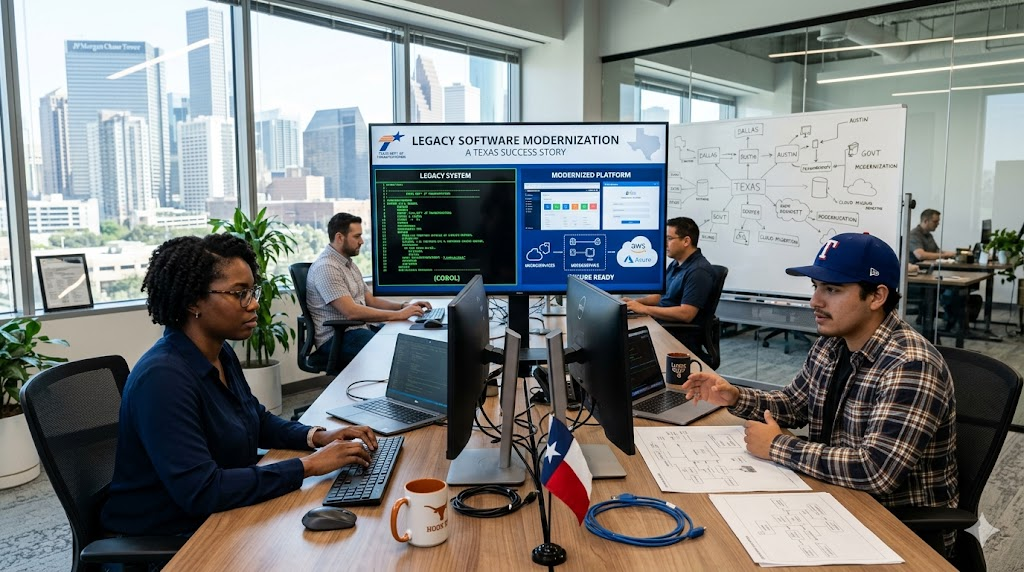
For mid-market enterprises across Dallas, Houston, and Austin, legacy IT infrastructures carry silent operational costs. Old codebases lack native integrations with modern API layers, creating siloed data and slow reporting. Furthermore, maintaining outdated code demands scarce, specialized developer talent, driving IT budgets toward maintenance rather than innovation.
Transitioning away from brittle frameworks minimizes operational overhead and removes hidden bottlenecks. Businesses can systematically evaluate their path forward by viewing a concise breakdown of modern structural options.
Modernization Paths: Strategic Architectural Options
| Strategic Approach | Core Technical Process | Core Business Benefit | Risk Profile |
| Replatforming | Moving code to cloud infrastructure with minimal modifications. | Reduces capital infrastructure costs quickly. | Low risk; minimal functional changes. |
| Refactoring | Optimizing internal code structures without modifying frontend behavior. | Dramatically improves backend efficiency and speed. | Medium risk; requires rigorous code vetting. |
| Rearchitecting | Shifting applications into modern microservices and API-first designs. | Maximizes technical scalability and integrates AI tools. | Higher risk; yields the highest long-term ROI. |
Accelerating Business Intelligence via Software Modernization
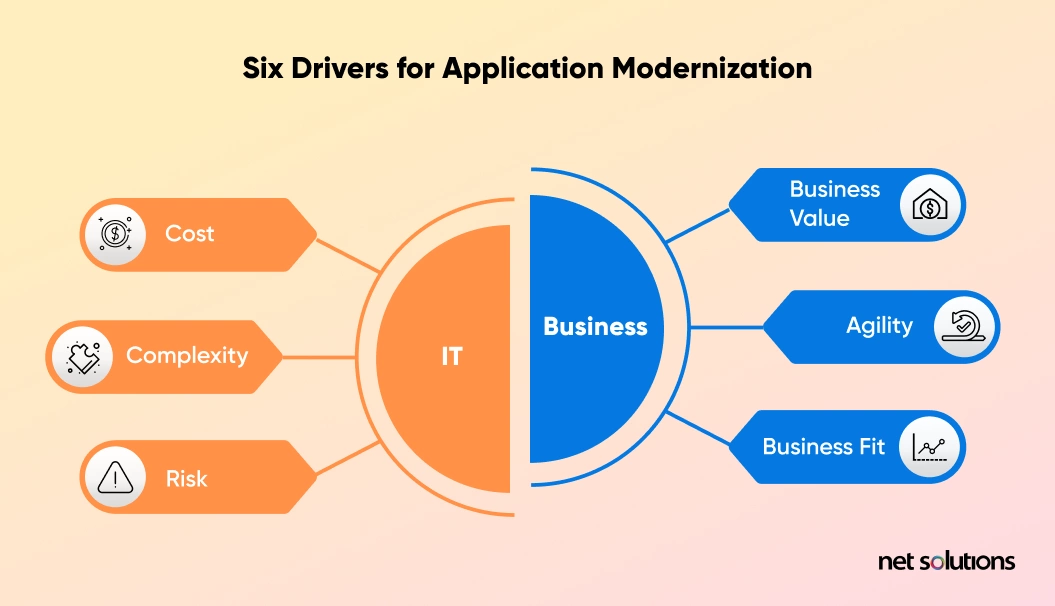
Modernizing software does not merely patch existing systemic flaws; it unlocks high-performance capabilities like real-time data engineering and AI automation. Outdated applications store operational metrics in fragmented databases, blinding executive teams to fast-moving market indicators.
Upgrading to an open web architecture allows enterprise data systems to seamlessly feed into advanced business intelligence tools. By establishing continuous, secure data pipelines, Texas organizations can confidently run predictive analytical models, streamline inventory tracking, and automate repetitive customer workflows.
Maintaining Data Integrity and Compliance in Texas
Texas enterprises operating in regulated landscapes—such as logistics, healthcare, and finance—must meet strict compliance frameworks. Legacy systems often lack the encryption protocols required to defend against advanced cybersecurity threats. Modernizing operational software incorporates a security-first design philosophy from day one.
A comprehensive application upgrade implements role-based access controls, advanced encryption layers, and automated compliance tracking. This protective layer ensures data privacy remains uncompromised, allowing corporate leadership to focus entirely on expanding market reach.
To understand more about the current national cybersecurity frameworks and standards governing software updates, reviewing official guides provided by the Cybersecurity and Infrastructure Security Agency can offer deeper compliance clarity.

Choosing a Dedicated Engineering Partner
Successfully updating complex, business-critical systems requires a proven engineering approach rather than generic, off-the-shelf software packages. A strategic technical partner helps align modern code with long-term commercial goals, turning technical debt into a scalable operational asset.
As a premier custom development firm serving Texas businesses, Virtue Works Inc. engineers robust, high-performance web applications and tailored AI solutions that accelerate corporate productivity. By combining deep technical precision with clear communication, they deliver modern software architectures engineered to scale.
Conclusion
Clinging to outdated legacy systems limits an enterprise’s ability to innovate and respond to market dynamics. Prioritizing legacy software modernization tx strategies eliminates operational friction, optimizes data visibility, and safeguards critical digital assets. Businesses can replace inefficient, fragmented applications with high-performing, scalable infrastructure built for sustainable, long-term operational growth.